Best Steel Water Tanks for Your Needs in 2026?
In 2026, the demand for Steel Water Tanks continues to rise. Market analysis shows that the global steel water tank industry is projected to grow at a CAGR of 5% by 2026. This growth can be attributed to the increasing need for durable and dependable water storage solutions. Experts in the field emphasize the versatility of steel tanks. Dr. Jane Holloway, a noted industry expert, states, “Steel Water Tanks offer unmatched strength and longevity.”
Despite advancements, challenges persist. Some manufacturers struggle with corrosion resistance, which can undermine tank performance. Regular maintenance remains crucial to ensure these tanks serve their purpose effectively. Choosing the right tank requires careful consideration of materials and design.
As we navigate this evolving market, understanding the specific needs of consumers is vital. Factors such as capacity, installation costs, and environmental conditions play significant roles. Ensuring that we select high-quality Steel Water Tanks can make the difference between reliable water supply and costly failures.
Top Features to Look for in Steel Water Tanks for 2026
When selecting steel water tanks for 2026, consider several key features. Durability is paramount. According to a recent industry report, steel tanks can last over 30 years with proper maintenance. They resist rust and corrosion, especially if coated. Look for tanks with an internal coating for enhanced longevity.
Capacity is another crucial factor. Steel water tanks offer significant volume options. Options range from small residential units to large commercial systems. A report by the Water Tank Alliance highlights that larger tanks are more efficient for storage. They reduce the need for frequent refills.
Insulation is often overlooked. Good insulation prevents temperature fluctuations in stored water. This can affect water quality, especially in extreme climates. Additionally, consider ease of maintenance. Some tanks require more maintenance than others. This could lead to higher long-term costs. Ultimately, a careful evaluation of these features will help identify the right tank for your needs.
Types of Steel Water Tanks Suitable for Different Applications
When choosing a steel water tank, consider the application. There are various types suited to different purposes. For agricultural use, larger tanks are essential. These tanks hold substantial amounts of water for irrigation and livestock. They often come with reinforced edges for durability.
In industrial settings, smaller, modular steel tanks are popular. They are easy to install and often stackable. This makes them adaptable for tight spaces. However, users should verify if the tank material meets their specific needs. Stainless steel is resistant to corrosion, but it's also costlier.
Residential water tanks are another category. These tanks can be both aesthetic and functional. Some homeowners might prefer tanks with coatings to blend into landscapes. Yet, not all coatings hold up against harsh weather. Regular maintenance is crucial to prevent leaks or rust. Considering these factors helps to choose the right tank effectively.
Comparative Analysis of Leading Steel Water Tank Brands for 2026
When choosing a steel water tank in 2026, consider key features. Different brands offer various capacities and designs. It’s vital to assess your specific needs. Some tanks are more durable but can be costly. A well-constructed tank may last longer, but installation costs could be high.
Another factor is corrosion resistance. Certain models come with special coatings, while others may rust over time. Regular maintenance is crucial for longevity. A tank that requires less upkeep saves effort but might lack some aesthetic appeal. Don’t overlook these details when making a decision.
Comparative analyses show that some tanks provide better insulation than others. This could affect water temperature and energy use. Look at user reviews for real-life experiences. Feedback often highlights both pros and cons. Weigh these insights carefully before making a choice. Each brand has its strengths and weaknesses. Think critically about what matters most to you.
Best Steel Water Tanks for Your Needs in 2026
| Capacity (Gallons) |
Material Thickness (Gauge) |
Dimensions (Diameter x Height) |
Weight (lbs) |
Warranty (Years) |
Price ($) |
| 500 |
14 |
48" x 72" |
160 |
10 |
1,200 |
| 1000 |
12 |
60" x 80" |
300 |
15 |
2,400 |
| 2000 |
10 |
72" x 120" |
600 |
20 |
4,800 |
| 3000 |
8 |
84" x 140" |
800 |
25 |
7,200 |
Maintenance Tips to Extend the Lifespan of Steel Water Tanks
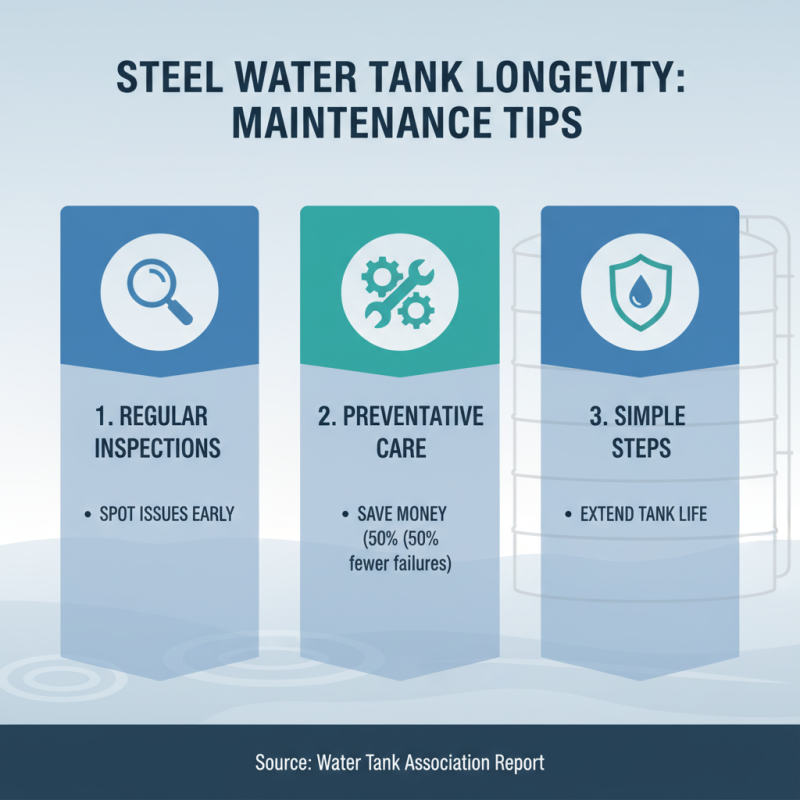
Proper maintenance is key to extending the lifespan of steel water tanks. Studies indicate that regular inspections can significantly reduce replacement costs. For instance, a report from the Water Tank Association highlights that over 50% of steel tanks fail prematurely due to neglect. Simple steps can make a huge difference.
Cleaning is vital. During inspections, check for rust or corrosion. Even small spots can lead to larger issues over time. Experts recommend using non-corrosive cleaners to protect your tank. Furthermore, consider applying protective coatings every few years. This can enhance durability and reduce oxidation.
Ensure that your tank is properly insulated. Extreme temperatures can cause stress. According to industry guidelines, proper insulation can increase tank lifespan by 30%. Ventilation also plays a role. Without adequate airflow, moisture accumulates, fostering rust. Regularly clear any debris around the tank. These small maintenance tasks can help avoid costly repairs and extend tank life.
Cost Considerations: Budgeting for Steel Water Tanks in 2026
When budgeting for steel water tanks in 2026, several factors come into play. First, material costs have fluctuated in recent years. Prices for steel can vary based on market conditions. Energy costs also impact the overall expenses of manufacturing and transporting these tanks. It's crucial to estimate how much you might pay based on these changes.
Additionally, the size of the tank matters. Smaller tanks are usually less expensive, but they may not meet all your water storage needs. On the other hand, larger tanks can provide more capacity but require a higher upfront investment. This can lead to a difficult choice: spend more now or face potential shortages later.
Consider installation and maintenance costs, too. Hiring professionals to ensure proper setup can add to your budget. Routine maintenance is vital for longevity but can be an ongoing expense. Balancing these costs is key for making the most informed decision. Reflect on your storage needs and financial situation before making a choice. Think long term. It’s easy to overlook future costs in the initial budgeting phase.