2026 Best Galvanized Water Tanks for Your Home or Farm?
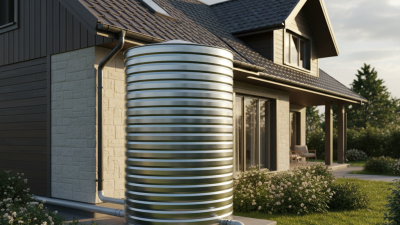
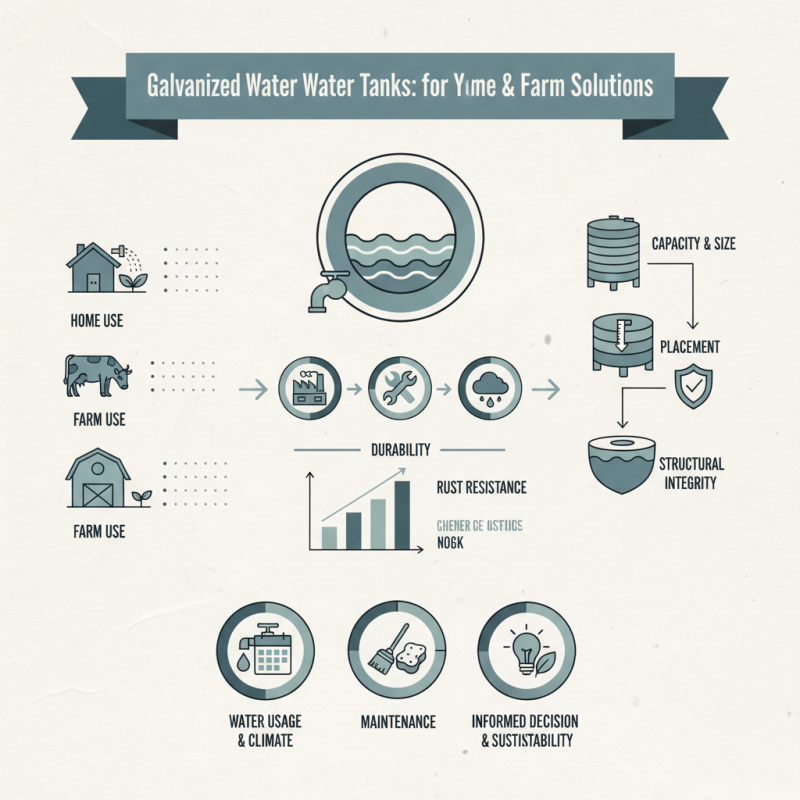
When considering water storage solutions for your home or farm, galvanized water tanks stand out as a reliable choice. These tanks are made from steel coated with zinc, ensuring durability and resistance to rust. They offer an effective way to collect and store water for various needs, from irrigation to livestock hydration. As you explore options, it’s crucial to consider capacity, size, and intended use.
Galvanized water tanks come in various shapes and sizes, catering to different requirements. Some people may overlook the importance of tank placement. Improper positioning can lead to accessibility issues. Furthermore, not all tanks are created equal. Some may lack the structural integrity needed to withstand harsh weather.
Choosing the best galvanized water tank requires careful thought. Think about your water usage patterns and local climate conditions. Reflect on maintenance needs as well. With the right information, you can make an informed decision. Investing wisely in galvanized water tanks can yield benefits for years, aiding both efficiency and sustainability in your water management strategy.
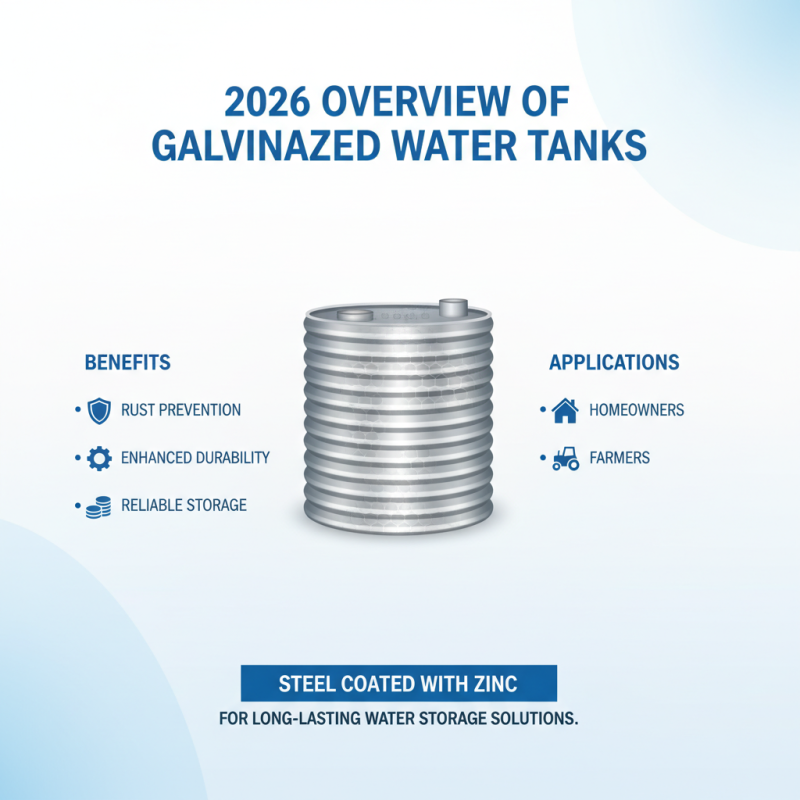
2026 Overview of Galvanized Water Tanks: Benefits and Applications
Galvanized water tanks have gained popularity in recent years for various applications. These tanks are made from steel that is coated with zinc. This coating helps prevent rust and enhances durability. Homeowners and farmers appreciate these qualities. They are a reliable choice for storing large quantities of water.
The benefits of galvanized water tanks are numerous. Their robust design allows them to withstand extreme weather conditions. They can be used for irrigation, livestock watering, and even as part of a home's plumbing system. Moreover, the tanks can be easily cleaned, which is essential for maintaining water quality. However, it’s important to consider the initial investment and setup required.
While galvanized tanks are effective, they are not without challenges. Over time, the zinc coating can wear off, leading to rust. Users need to monitor their tanks regularly for signs of deterioration. Additionally, heavy snowfall or ice can cause structural issues if not managed properly. It's crucial to assess these factors before making a purchase.
Key Features to Consider When Choosing a Galvanized Water Tank
When selecting a galvanized water tank for your home or farm, key features play a crucial role. Look for a tank made from high-quality zinc-coated steel, which can resist corrosion effectively. According to industry reports, galvanized tanks can maintain their integrity for over 30 years, providing long-lasting service. The size of the tank also matters. Choose a capacity that suits your needs, whether for livestock or household use.
Capacity is just one aspect. Check for appropriate features like a good sealing design. This prevents contamination and keeps water clean. Insulation is another critical factor, especially in fluctuating temperatures. Tanks with insulation can help maintain water temperature for longer periods.
Tip: Regular maintenance of the tank extends its life. Inspect for rust or damage periodically. Consider adding a filter to improve water quality. Always monitor the tank’s water levels and condition. It’s easy to overlook these areas, yet they are vital for performance and longevity. Remember, even the best tanks need care and attention.
Comparative Analysis: Galvanized Tanks vs. Other Materials in 2026
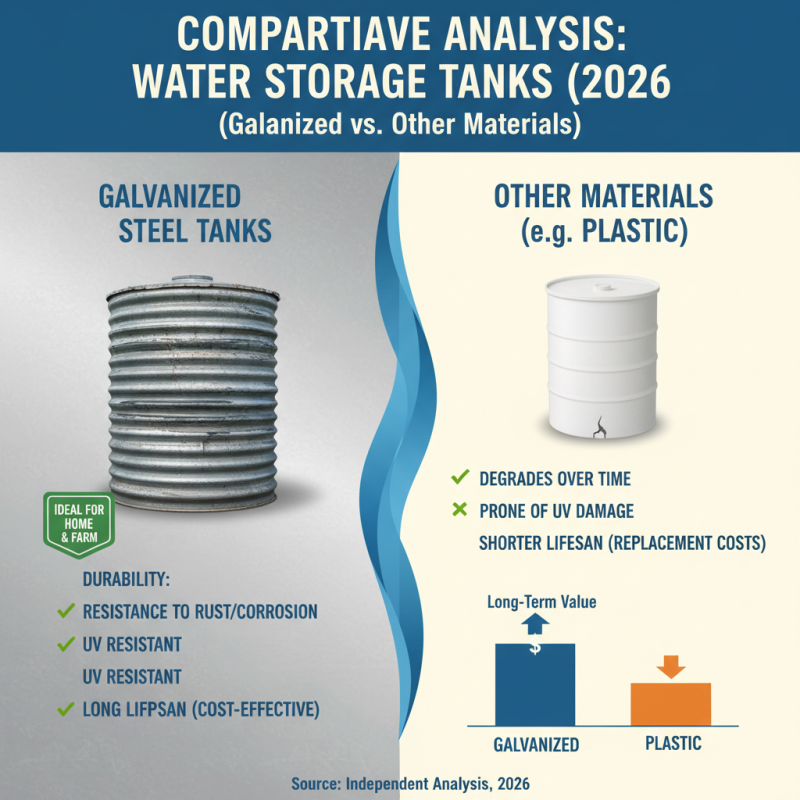
When considering water storage options for your home or farm, galvanized tanks stand out. These tanks offer durability and resistance to rust, making them ideal in diverse conditions. Unlike plastic tanks, which can degrade over time, galvanized versions withstand UV light. This longevity makes them a worthwhile investment.
However, it’s essential to reflect on your specific needs. If you live in an area with extreme temperatures, consider how materials might react. Steel tanks can experience thermal expansion. It’s a factor often overlooked but can affect water quality and structural integrity.
**Tip:** Regular maintenance checks can extend the life of your galvanized tank. Look for signs of corrosion and address them promptly. Cleaning your tank can also prevent algae growth, ensuring safe water storage.
While there are benefits, it’s crucial to weigh them against alternatives. Fiberglass tanks, for example, are lightweight and resistant to chemical corrosion. They may be easier to install but come with their own set of vulnerabilities. Assessing your priorities—cost, installation, and long-term reliability—is vital for making the best choice.
Industry Standards and Regulations for Galvanized Water Tanks
When considering galvanized water tanks for your home or farm, understanding industry standards and regulations is crucial. These guidelines ensure safety and efficiency. Many regulations focus on materials used and structural integrity. Tanks must be constructed to withstand various environmental conditions. Compliance with these standards can prevent future issues.
Tips: Regularly check for any signs of rust or corrosion. These factors can compromise the tank’s integrity. Schedule maintenance inspections to catch potential problems early.
Local health departments often set specific requirements for water storage. Ensure your tank meets these to keep your water supply safe. Document all inspections and repairs as proof of compliance.
Tips: Consider the tank's location. The site should be accessible for maintenance yet away from potential contaminants. Ensure proper drainage around the tank to prevent water pooling.
Understanding and adhering to industry standards is vital. It allows you to enjoy the benefits of your tank without health risks. Though these regulations may seem burdensome, they protect you and your water supply.
2026 Best Galvanized Water Tanks for Your Home or Farm
| Tank Capacity (Gallons) |
Tank Dimension (Feet) |
Material Thickness (Gauge) |
Weight (lbs) |
Warranty (Years) |
Price ($) |
| 500 |
4 x 6 |
12 |
200 |
5 |
300 |
| 1000 |
5 x 8 |
10 |
350 |
7 |
450 |
| 1500 |
6 x 10 |
8 |
500 |
10 |
600 |
| 2000 |
8 x 10 |
8 |
700 |
12 |
700 |
| 3000 |
10 x 10 |
6 |
800 |
15 |
900 |
Top 5 Recommended Galvanized Water Tanks for Home and Farm Use in 2026
When considering galvanized water tanks for your home or farm, several options stand out for 2026. Galvanized steel tanks are renowned for their durability and resistance to rust. They can hold large amounts of water, making them ideal for livestock or irrigation. However, selecting the perfect tank requires careful thought.
Look for tanks with a solid construction. The thickness of the metal matters. Thicker materials last longer but may cost more. Consider the tank’s capacity to meet your needs—do you require a smaller tank for a garden or a massive one for a farm? Some tanks even come with additional features like integrated filters or easy-access lids. These elements can enhance functionality but may complicate installation.
Not every option on the market will meet high standards. Conduct thorough research and consult with experts. Online reviews and comparisons often reveal hidden issues. Some tanks may have unanticipated leaks or rust spots after a few years. Keep this in mind while shopping. The goal is to find a reliable, long-lasting tank that serves your specific requirements effectively. Don't rush the decision; take your time to choose wisely.