How to Choose the Best Galvanized Water Tanks for Your Needs?
Choosing the right Galvanized Water Tanks is crucial for efficient water storage. As John Davis, an expert in water management, once said, “Selecting the right tank can make or break your water system.” These tanks are durable and can withstand harsh conditions, making them a popular choice.
However, not all galvanized tanks are created equal. You must consider factors like size, capacity, and placement. Each of these aspects can affect the tank's performance. Many users overlook these details, leading to potential issues down the line.
When selecting your tank, it’s important to reflect on your specific needs and use scenarios. What works for one user may not suit another. Understanding the long-term impact of your choice can ensure you avoid pitfalls in the future. Galvanized Water Tanks are an investment, and careful consideration is necessary.
Understanding the Benefits of Galvanized Water Tanks
Choosing the right galvanized water tank can significantly impact your water storage needs. These tanks are highly durable, resisting rust and corrosion. Their longevity makes them suitable for various environments, from agricultural to residential. Galvanized tanks can handle extreme weather conditions without compromising integrity. This durability is essential for those seeking reliable water storage solutions.
Another key benefit lies in their ability to maintain water quality. Galvanized tanks minimize algae growth and sediment accumulation. This results in cleaner and healthier water for everyday use. Homeowners can also appreciate how easy it is to maintain these tanks. Regular cleaning and inspection can ensure optimal performance.
Despite their many advantages, there are considerations to keep in mind. Proper installation is critical; an incorrectly placed tank can lead to leaks or damage. Also, it's worth noting that while galvanized tanks are robust, they can still suffer from wear over time. Regular checks are necessary to catch any issues early.
Identifying Your Water Storage Needs and Capacity Requirements
When selecting galvanized water tanks, it's essential to identify your specific water storage needs and capacity requirements. Start by evaluating your average daily water usage. According to the American Water Works Association, the average household uses about 80-100 gallons of water per person each day. Therefore, consider how many people will rely on the tank. Larger families or farms may require tanks with a capacity exceeding 1,000 gallons.
Tips: Calculate your peak usage times. Do you need water for livestock, irrigation, or just household use? Knowing when you need the water can influence capacity decisions.
Another factor is the available space for the tank. Many properties have limitations on size. Some tanks may create aesthetic concerns or zoning issues. The design, such as vertical or horizontal orientation, can impact your options. Reports indicate that nearly 30% of tank buyers overlook this aspect. It's crucial to visualize where the tank will go and how it fits into your layout.
Tips: Measure the area before purchasing. This can save you from choosing an ill-fitting tank. Reflect on your future needs as well. If you expect growth in your household or operations, consider a larger tank now to accommodate potential increases.
Evaluating the Durability and Maintenance of Galvanized Tanks
Galvanized water tanks are recognized for their durability. When assessing their lifespan, factors such as environment and maintenance play a crucial role. According to industry reports, properly maintained galvanized tanks can last over 30 years. However, neglect can lead to corrosion and reduced efficiency.
Proper maintenance involves regular inspections. Look for signs of rust or damage. Some areas may need more attention due to local weather conditions. In humid climates, tanks may corrode faster. Keep drainage channels clear to avoid standing water, which can accelerate weathering.
Tip: Always apply a protective coating to areas showing wear. This simple step can increase the tank’s lifespan significantly.
Remember, not all tanks are made equal. Some cheaper options may cut corners on galvanization. Reports suggest investing in thicker materials can pay off in the long run. Choose a tank based on your specific water needs and environment. Evaluate your options carefully. Reflect on your choices and choose wisely.
Comparing Different Brands and Models of Galvanized Water Tanks
When selecting galvanized water tanks, various brands and models offer distinct features. It's essential to explore differences in size, capacity, and materials. Some brands focus on durability, while others emphasize lightweight designs. Not all options are created equal. A tank might be affordable but lack the quality needed for long-term use.
Consider the intended use of the tank. Is it for irrigation, livestock, or domestic use? Each scenario demands a different tank capacity. Some users find that a smaller tank, while cheaper, doesn’t meet their needs. Compare warranties too. A longer warranty often reflects better quality but doesn’t always promise performance.
Evaluate customer reviews for insights into reliability and maintenance. Some tanks may rust faster than others, even if they are galvanized. Reflecting on past purchases may prove valuable. Did the chosen tank meet your expectations? Understanding these differences will lead to more informed decisions.
How to Choose the Best Galvanized Water Tanks for Your Needs?
| Tank Capacity (Gallons) |
Material Thickness (mm) |
Corrosion Resistance Rating |
Warranty (Years) |
Price (USD) |
| 500 |
2.0 |
Excellent |
10 |
450 |
| 1000 |
2.5 |
Very Good |
8 |
750 |
| 1500 |
2.5 |
Good |
7 |
1200 |
| 2000 |
3.0 |
Excellent |
12 |
1500 |
Considering Cost and Installation Factors for Your Tank Choice
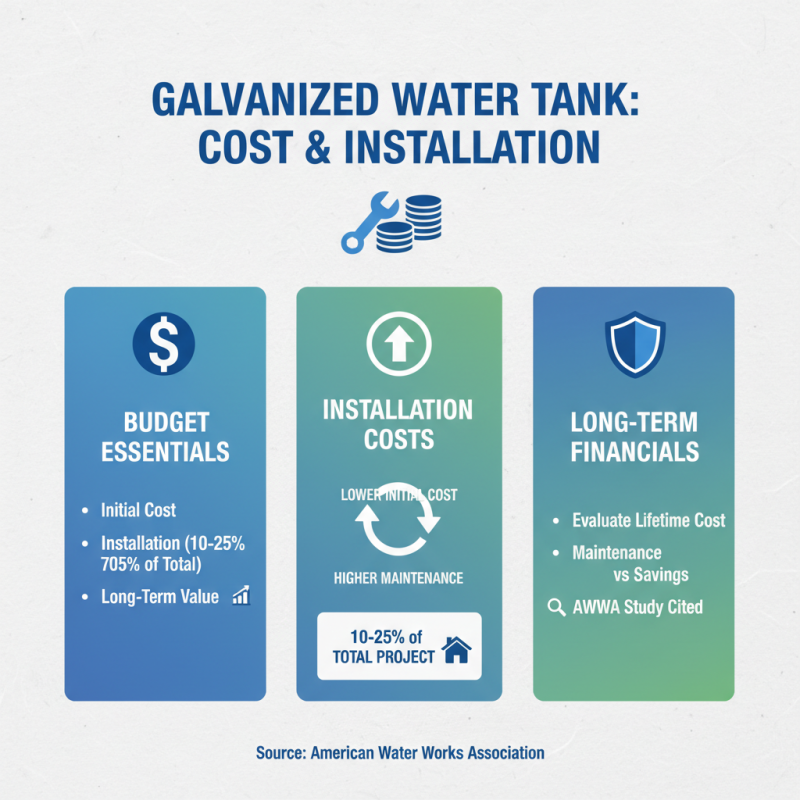
When choosing a galvanized water tank, cost and installation play critical roles. A study by the American Water Works Association highlights that installation costs can range from 10% to 25% of the total project expense. Understanding your budget is essential. Lower initial costs may lead to higher maintenance expenses down the line. It’s important to evaluate the long-term financial implications.
Installation factors are equally important. If the site has limited access, installation may become more complicated. In some cases, this could double the typical installation time, which directly affects labor costs. According to industry reports, proper site preparation can reduce unforeseen expenses by up to 30%. Choosing the right size and type of tank is vital. Each tank's design can influence drainage efficiency and installation logistics.
Reflect on these key aspects while making a decision. Sometimes, opting for the cheapest option creates future headaches. Investing in quality and proper installation might seem costly upfront—but can save money over time. Look at the whole picture, not just the initial price tag. Do thorough research before making a final choice.