How to Choose the Right Square Water Tanks for Your Needs?
Choosing the right Square Water Tanks can significantly impact water storage efficiency. According to John Mills, a renowned expert in water management, "Selecting a water tank is more than just size; it’s about matching needs with design." Understanding your requirements is crucial for effective decision-making.
When evaluating Square Water Tanks, consider not only the dimensions but also material types. Think about where the tank will be located. Is it a space-efficient solution for your property? Sometimes, a larger tank could be counterproductive. Evaluating design features often requires deep reflection on your unique situation.
It’s easy to overlook maintenance aspects. How often will you inspect or clean the tank? Many underestimate this factor. Choosing the right tank can lead to long-term benefits, but neglecting small details may cause significant problems later. Take the time to weigh your options carefully.
Understanding Different Types of Square Water Tanks Available
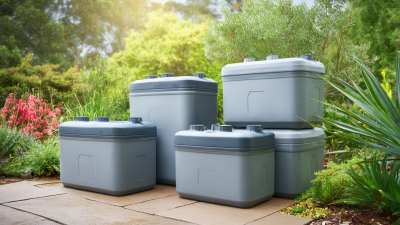
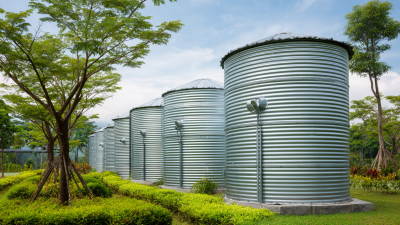
When choosing square water tanks, understanding the different types available is crucial. There are plastic, metal, and concrete options. Plastic tanks are lightweight and resistant to corrosion. They are often used for residential purposes. Metal tanks, often made of steel, can be more durable but may require additional maintenance. Concrete tanks provide strength and stability, often suited for underground installations.
Each type has its pros and cons. Plastic tanks may crack under extreme temperatures. Metal tanks can rust if not treated properly. Concrete tanks can be expensive and heavy, making installation a challenge. Consider the expected usage and environment. A tank in a harsh climate needs special attention. Factors like size, capacity, and budget are also essential.
Choosing the right water tank isn’t just about the type. It’s about analyzing where and how you will use it. Reflect on your specific needs. Will it be above ground or below? Will you need insulation? These questions matter. Don’t rush—take your time in making a decision. An informed choice today will serve you better tomorrow.
Square Water Tanks Capacity Comparison
This chart illustrates the different capacities of square water tanks available in liters. It serves as a quick reference for selecting the right tank size based on your water storage needs.
Evaluating Storage Capacity and Size Requirements for Your Needs
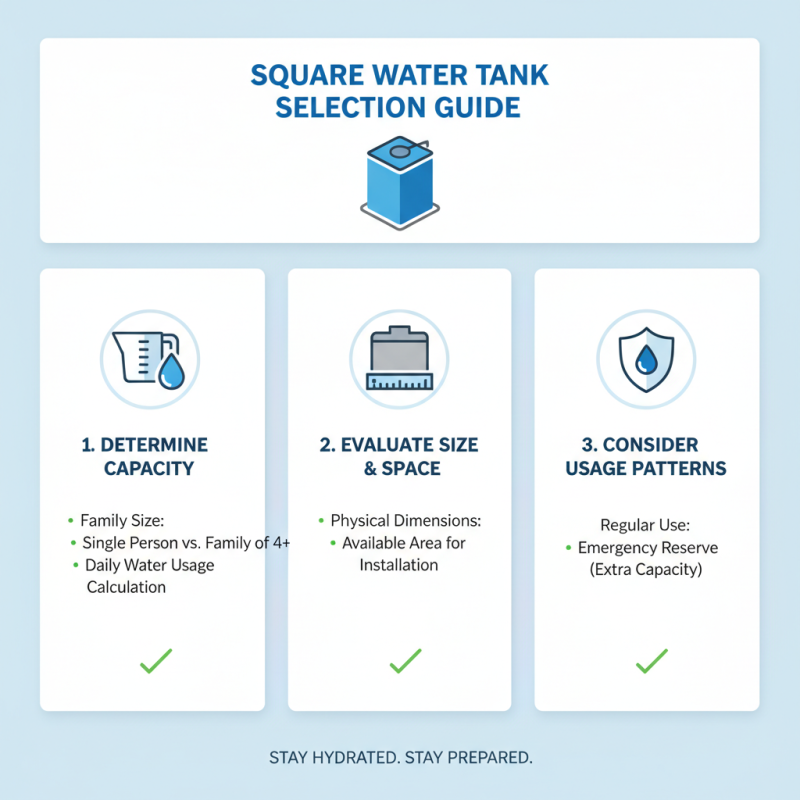
When selecting a square water tank, evaluating storage capacity and size is crucial. Consider the volume of water you require. A family of four may need a larger tank than a single person. Calculate daily water usage to find your ideal size. Think about your usage patterns. Will you need extra space for emergencies?
Beyond capacity, the tank dimensions matter. Measure the available space in your home or yard. A tank that is too big can be cumbersome. It can rule out certain areas for installation. Also, check the height. Some places may have overhead limitations.
Reflect on your future needs. You might not require a large tank today, but plans can change. Perhaps you will expand your family or start a garden. Anticipating these needs can save you from costly replacements later. While it’s easy to choose a tank based on current capacity, always think ahead.
Assessing Material Options and Durability Factors for Tanks
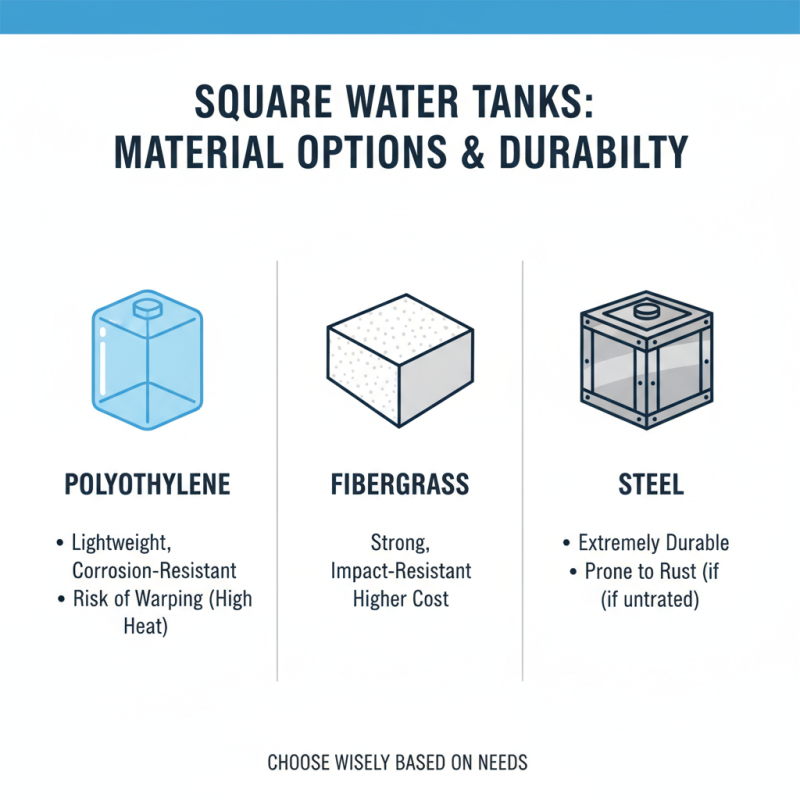
When selecting square water tanks, material options and durability are crucial. Common materials include polyethylene, fiberglass, and steel. Each has distinct advantages and drawbacks. Polyethylene tanks are lightweight and resist corrosion. However, high temperatures may cause warping. Fiberglass offers strength and resistance to impact. Yet, its cost can be higher than other options.
Steel tanks are durable and strong but can suffer from rust and require protective coatings. Data from industry reports indicate that nearly 25% of steel tanks show signs of corrosion after ten years. This highlights the importance of considering maintenance needs when choosing materials. Durability also involves assessing environmental factors. Tanks exposed to harsh weather may degrade faster.
In addition, strength ratings are vital. A tank's structural integrity can determine its longevity. Some tanks undergo rigorous testing, receiving certifications for durability. However, not all manufacturers follow the same standards. It's essential to research certifications and performance metrics before making a decision. This proactive approach helps mitigate future issues and ensures a safer water storage solution.
Identifying Key Features and Accessories for Enhanced Functionality
Choosing the right square water tank involves more than just capacity. It’s crucial to consider key features that enhance functionality. One of the primary aspects is the tank material. Options like plastic, fiberglass, or metal each have unique benefits. Plastic tanks are lightweight and resistant to corrosion, while metal tanks offer durability and strength. However, every material has its drawbacks. For instance, metal tanks can rust if not properly maintained.
Accessories play a pivotal role in maximizing the utility of your water tank. Valves, for instance, can prevent leaks and control flow. Additionally, a reliable overflow system is essential to avoid spillage. Consider installing a filter to maintain water purity. Another useful accessory is a level indicator, which helps monitor the water level efficiently. Yet, one may overlook these necessities during the buying process. Returning to assess what your tank requires can prevent future issues.
Don't forget the tank's placement. It should be easily accessible for maintenance. Think about the surrounding environment as well. Shade might be needed to protect the tank from UV degradation. Remember, neglecting these details can lead to unforeseen challenges later. The right features and accessories can significantly enhance your water tank's performance. Take the time to evaluate what suits your needs best.
How to Choose the Right Square Water Tanks for Your Needs?
| Feature |
Description |
Importance |
| Material |
Choose between polyethylene, fiberglass, and stainless steel based on durability and cost. |
High |
| Capacity |
Select a size that fits your water storage needs, considering future expansion. |
Critical |
| Installation |
Assess the complexity of installation and the tools required. |
Medium |
| Accessibility |
Ensure the tank can be easily accessed for maintenance and cleaning. |
High |
| Accessories |
Consider including float valves, filters, and level indicators for enhanced functionality. |
Important |
| Regulations |
Verify local regulations regarding water tank installation and safety standards. |
Essential |
Considering Budget and Installation Factors for Square Water Tanks
Choosing the right square water tanks involves careful consideration of your budget and installation factors. Water tanks come in different materials and sizes, affecting both cost and functionality. Setting a clear budget is crucial. You should know your limits before exploring options. Square tanks can be affordable, but prices vary significantly.
When it comes to installation, think about the space. Measure the area where the tank will be placed. Some tanks require more space than you might expect. It’s vital to plan ahead. Improper installation can lead to leaks and costly repairs. Factor in whether you will do it yourself or hire professionals. A DIY installation may save money, but can come with risks if not done correctly.
Tips:
Consider maintenance costs too. Cheaper tanks may need replacing sooner. Think long-term. Also, check local regulations, as they may affect your choices. Size matters—too large can lead to inefficient water use. Don't rush! Take time to evaluate your needs and options.