Leave Your Message
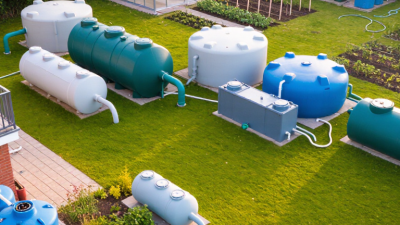
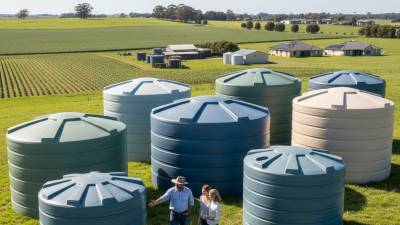
Choosing a reliable Water Storage Tank supplier requires more than comparing prices or browsing polished product pages. Tank material, manufacturing control, installation support, and long-term maintenance directly affect water safety and operating costs. A steel tank may suit a municipal project, while a polyethylene tank can work better for a farm, construction site, or small commercial facility.
Water expert Dr. Peter Gleick has observed, “Water is the lifeblood of our economy, our communities, and our environment.” His statement reflects a practical truth: storage quality influences daily resilience. A poorly selected tank can develop leaks, algae growth, corrosion, or structural stress after years of heat and fluctuating water levels.
This guide examines ten leading Water Storage Tank suppliers worldwide through a practical industry lens. The comparison considers product range, tank materials, engineering capability, certifications, customization, delivery experience, and after-sales service. It also recognizes an important limitation. Supplier rankings can change by region, project scale, and available evidence.
Real performance matters.
A residential buyer may prioritize compact design and simple cleaning. An industrial customer may need welded steel construction, seismic engineering, and documented quality checks. Rainwater harvesting projects require different decisions from potable-water systems.
The selected companies are not presented as universally perfect. That would be unrealistic. Instead, this overview helps readers ask better questions before purchasing. Buyers should verify local compliance, warranty terms, water-contact approvals, installation requirements, and spare-part availability. A strong supplier provides more than a tank. It provides traceable specifications, realistic technical advice, and support that remains useful after delivery.
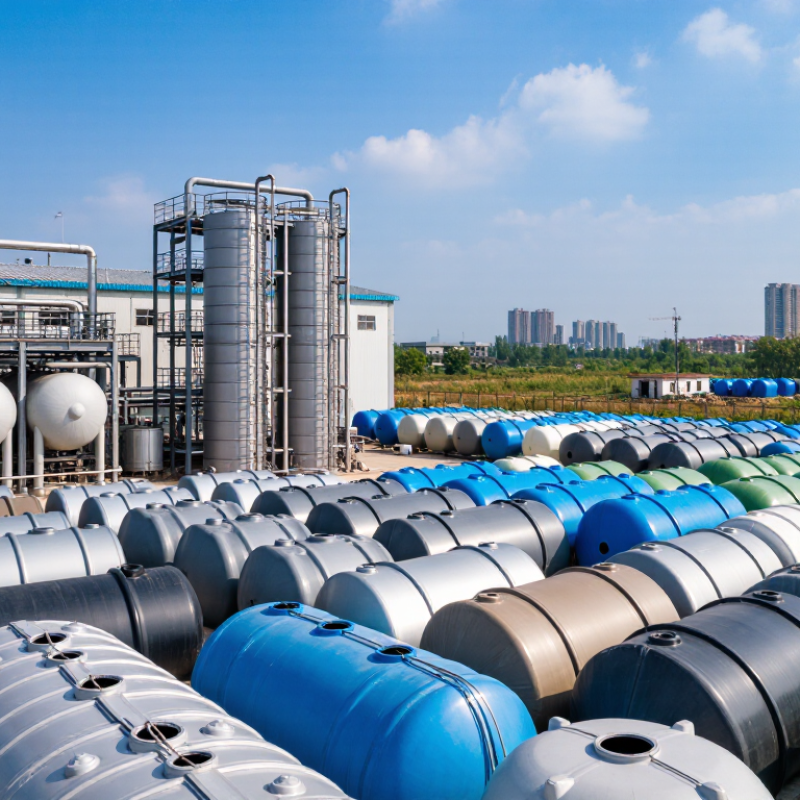
Top 10 Water Storage Tank Suppliers Worldwide
The global water storage tank market is shaped by scarcity, urban growth, and stricter quality controls. The WHO/UNICEF Joint Monitoring Programme reported that 2.2 billion people lacked safely managed drinking water in 2022. Storage is not optional in many regions. It supports hospitals, farms, factories, and emergency reserves. FAO data also shows that agriculture uses about 70% of global freshwater withdrawals. Tank demand therefore varies sharply by climate, regulation, and operating purpose.
Supplier selection should begin with the water, not the catalogue. Confirm whether the tank will store drinking water, process water, fire reserves, or wastewater. Check material traceability, internal coatings, welding records, and independent hygiene certification. Design files should address wind, seismic loads, temperature changes, foundation movement, and access for cleaning. A tank can look excellent on delivery and still fail through poor site preparation. This is often overlooked.
Lifecycle cost deserves equal attention. Compare installation time, inspection needs, corrosion protection, replacement parts, transport distance, and warranty conditions. Request project references in similar climates. Review factory testing and documented quality procedures. The Global Water Intelligence market analysis continues to identify resilience and decentralized storage as important investment themes. Yet market reports can simplify local realities. A low purchase price may hide difficult maintenance, uncertain logistics, or limited technical support. No specification sheet replaces a site visit.
| Rank | Supplier ID | Primary Supply Region | Core Tank Technologies | Typical Capacity Range | Common Construction Materials | Applicable Standards | Typical End-Use Markets | Customization Capability | Indicative Lead Time | Market-Screening Score |
|---|---|---|---|---|---|---|---|---|---|---|
| 1 | Supplier Profile 01 | North America and international export markets | Bolted steel Field-welded steel Membrane-lined tanks | 100 m³–20,000 m³ | Carbon steel with protective coating; galvanized steel; reinforced concrete foundations | AWWA D103; API 12B; NSF/ANSI/CAN 61 where drinking-water contact applies | Municipal water, fire protection, industrial process water, wastewater | High: internal liners, insulation, mixers, roof systems and seismic options | 10–24 weeks, project dependent | 9.3 / 10 |
| 2 | Supplier Profile 02 | Western Europe and Middle East export markets | Glass-fused-to-steel Bolted steel Epoxy-coated tanks | 50 m³–15,000 m³ | Glass-fused steel; epoxy-coated carbon steel; stainless steel fittings | EN 1090; EN 1993; ISO 9001; local potable-water approval as required | Drinking water, desalination, fire water, agricultural storage | High: corrosion protection, access systems, roof configurations and accessories | 12–28 weeks, project dependent | 9.1 / 10 |
| 3 | Supplier Profile 03 | East Asia and Southeast Asia | Pressed-panel tanks Stainless steel tanks FRP tanks | 1 m³–5,000 m³ | 304/316 stainless steel; hot-dip galvanized steel; fiber-reinforced plastic | ISO 9001; JIS or equivalent material standards; NSF/ANSI/CAN 61 when certified | Commercial buildings, food processing, hospitals, domestic water systems | Medium to high: panel dimensions, fittings, insulation and support frames | 6–18 weeks, product dependent | 8.9 / 10 |
| 4 | Supplier Profile 04 | South Asia and Africa export markets | Bolted steel Liner tanks Zinc-coated tanks | 30 m³–10,000 m³ | Galvanized steel; coated carbon steel; PVC, EPDM or equivalent liners | AWWA D103; ISO 9001; WRAS or equivalent approval where required | Rural water supply, irrigation, mining, emergency and fire storage | Medium: standard modular designs with project-specific connections | 8–20 weeks, logistics dependent | 8.6 / 10 |
| 5 | Supplier Profile 05 | Australia, Oceania and Asia-Pacific | Corrugated steel Liner tanks Rainwater tanks | 5 m³–5,000 m³ | Galvanized or zinc-aluminum steel; polyethylene; reinforced liners | AS/NZS 4020; AS/NZS 4766; local building and water-quality requirements | Rainwater harvesting, livestock, agriculture, domestic and industrial use | Medium: tank height, liner grade, platforms and inlet arrangements | 4–16 weeks, stock and freight dependent | 8.4 / 10 |
| 6 | Supplier Profile 06 | Central and Eastern Europe | Welded steel Stainless steel Underground tanks | 10 m³–8,000 m³ | Carbon steel; stainless steel; concrete and polymer-based waterproofing systems | EN 12285; EN 1993; CE marking requirements where applicable | Industrial water, chemical processing, municipal infrastructure and fire protection | High: engineered supports, coatings, access equipment and process connections | 12–30 weeks, engineering dependent | 8.3 / 10 |
| 7 | Supplier Profile 07 | Latin America and regional export markets | Bolted steel Concrete-supported tanks Flexible tanks | 20 m³–12,000 m³ | Coated carbon steel; galvanized steel; PVC or reinforced flexible membranes | ISO 9001; AWWA or local structural standards; potable-water requirements by jurisdiction | Mining, agriculture, municipal supply, water treatment and emergency storage | Medium to high: liners, covers, fittings, foundations and installation services | 8–22 weeks, site conditions dependent | 8.1 / 10 |
| 8 | Supplier Profile 08 | Middle East and North Africa | GRP/FRP tanks Bolted steel Desalination storage | 10 m³–10,000 m³ | Glass-reinforced plastic; coated steel; stainless steel wetted components | ISO 9001; ASTM or EN material standards; local potable-water certification | Desalination, hotels, district cooling, municipal and industrial water | High: UV protection, corrosion-resistant components, insulation and automation | 8–24 weeks, specification dependent | 8.0 / 10 |
| 9 | Supplier Profile 09 | Sub-Saharan Africa and humanitarian supply markets | Flexible bladder tanks Liner tanks Modular steel tanks | 5 m³–2,000 m³ | Reinforced PVC or TPU membranes; galvanized steel; coated fabric structures | ISO 9001; applicable drinking-water-contact requirements; local installation codes | Emergency relief, remote communities, irrigation, construction and temporary supply | Medium: portable layouts, liners, covers, pumps and treatment interfaces | 2–14 weeks, inventory dependent | 7.8 / 10 |
| 10 | Supplier Profile 10 | Global project and original-equipment supply networks | Polyethylene tanks FRP tanks Packaged systems | 0.5 m³–1,500 m³ | Rotomolded polyethylene; FRP; stainless steel and polymer accessories | NSF/ANSI/CAN 61 where applicable; ISO 9001; regional pressure and electrical codes | Commercial buildings, water treatment, laboratories, food and beverage facilities | Medium: standard products with optional sensors, pumps, valves and control panels | 2–16 weeks, configuration dependent | 7.6 / 10 |
Selection note: Capacity ranges, lead times and technology categories represent typical international market ranges for comparable supplier profiles. Final selection should verify structural calculations, potable-water approvals, coating or liner compatibility, seismic and wind loads, installation capability, warranty terms, lifecycle cost and after-sales support for the specific project.