Choosing among the 7 Best Square Water Tanks for Global Buyers requires more than comparing prices. Buyers must consider water quality, tank capacity, material strength, installation space, and long-term maintenance. A tank that performs well on a dry farm may not suit a coastal warehouse or a crowded urban property.
Square Water Tanks are often valued for their efficient use of corners and walls. Their shape can simplify storage planning, especially where land is limited. However, design alone does not guarantee reliability. Wall thickness, UV resistance, fittings, support requirements, and cleaning access deserve careful inspection. Small details matter. A weak outlet connection can create costly leaks.
This guide evaluates seven practical options using clear, experience-based criteria. It considers common applications, including household storage, agricultural use, commercial facilities, and emergency water reserves. Product information should still be checked against current regional standards and supplier documentation before purchase. Manufacturing quality may vary between batches, even within the same product range.
No ranking is perfect. Local climate, water type, transport conditions, and installation skills can change the final choice. Some buyers may prefer a compact tank, while others need higher capacity or stronger reinforcement. The goal is not to name one universal winner. It is to help global buyers compare dependable features, identify hidden limitations, and select a tank that fits real operating conditions.
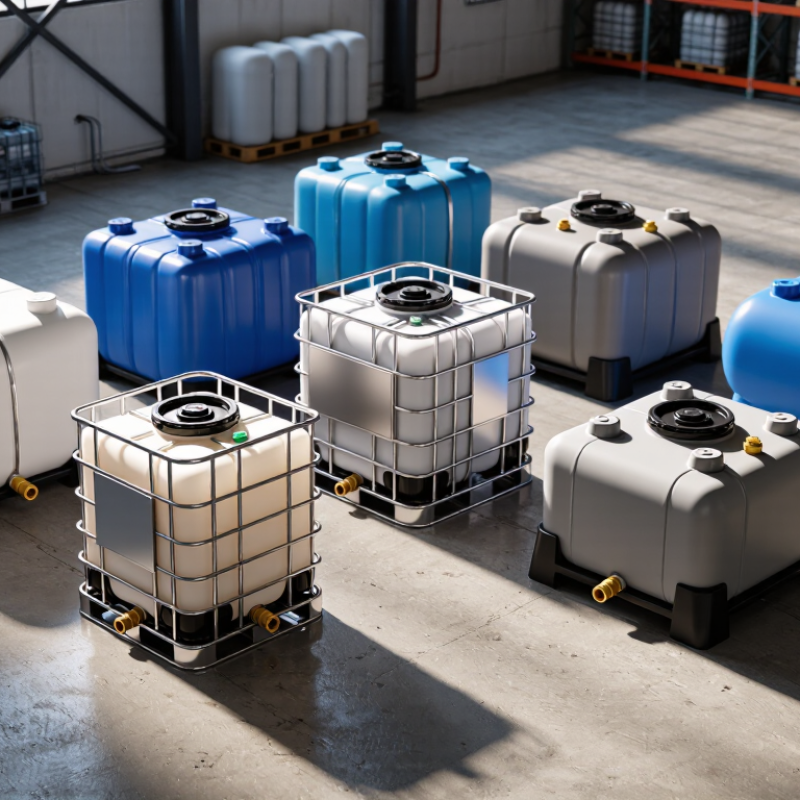
Square water tanks suit global buyers because they use space efficiently. Their straight sides fit neatly against walls, fences, and warehouse corners. This matters in crowded urban areas and remote sites with limited land. A 2,000-litre square tank can often occupy less unused space than a round tank. It may also stack more efficiently during transport, reducing movement and handling costs. However, dimensions vary widely. Buyers should measure doors, loading areas, and installation paths before ordering.
Climate is another practical concern. Tanks exposed to strong sunlight need UV-resistant materials and secure covers. In colder regions, insulation and frost protection may be essential. For drinking water, buyers should request documented food-contact compliance, not rely on vague product descriptions. Local water regulations still apply. They differ between countries. Good tanks also include strong outlets, replaceable seals, inspection openings, and stable bases. These details affect maintenance after installation, especially where replacement parts are difficult to obtain.
A useful seven-point check includes material quality, capacity accuracy, UV protection, fittings, cleaning access, structural strength, and certification. I have seen buyers focus on price and overlook outlet placement. That mistake can create expensive pipe changes later. Square tanks are not automatically better. Poorly supported walls may bulge, and uneven ground can cause stress. A level foundation, correct anchoring, and clear installation instructions are necessary. Some specifications remain confusing, so buyers should ask for drawings, test documents, and warranty limits before making a cross-border purchase.
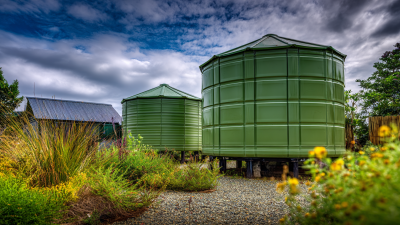
Global buyers often choose square water tanks when land is limited and installation must fit a wall, roof, or service corridor. The seven leading options differ in strength, hygiene, transport, and maintenance.
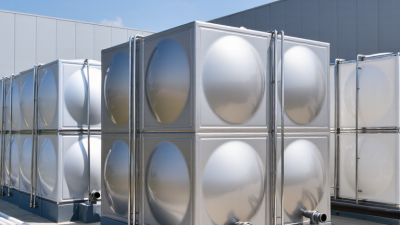
Rotomolded polyethylene tanks are lightweight, corrosion-resistant, and practical for homes or farms. Their dark interiors can reduce algae growth, but heat may affect stored water. Sectional panel tanks use bolted steel or composite panels, making them suitable for large buildings and difficult access routes. They require careful sealing. Galvanized steel tanks offer strong structural support and broad capacity, although scratched coatings can invite corrosion. Stainless steel tanks provide excellent hygiene and a long service life. They cost more, and poor welding can still create weak points.
Fiberglass square tanks resist many chemicals and remain relatively light. However, ultraviolet exposure may degrade lower-quality surfaces. Concrete tanks suit permanent installations, especially underground or beside utility buildings. They need sound foundations and regular crack inspections. Framed cube tanks with flexible liners are easy to transport and deploy. The liner can puncture, and replacement planning matters.
In field assessments, I check water temperature, foundation level, cleaning access, inlet height, overflow routing, and local approval requirements. Tank volume alone is misleading. A 5,000-liter unit may not fit a narrow gate or support uneven ground. Square walls also experience concentrated pressure at corners. I have seen installation delays caused by missing lifting points and undersized access doors. That detail is easy to overlook. Buyers should compare material certificates, warranty conditions, spare-part availability, and cleaning procedures before selecting a tank.
| Option | Typical Capacity | Common External Size | Primary Material | Typical Water-Storage Use | Key Advantages | Important Considerations | Portability | Indicative Service Life |
|---|---|---|---|---|---|---|---|---|
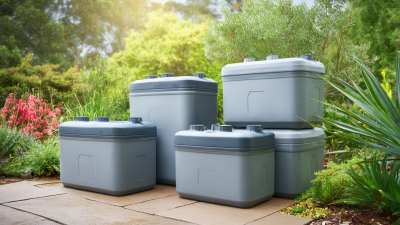
| 1. Compact Polyethylene Cube Tank | 300–1,000 L | Approximately 0.75–1.15 m wide × 0.75–1.15 m deep × 0.75–1.25 m high | UV-stabilized, food-grade linear polyethylene | Household backup water, gardening, small rainwater-harvesting systems | Lightweight, corrosion-resistant, easy to clean, and suitable for confined spaces | Requires a level base; dark or shaded placement is preferred to limit algae growth | Good when empty; usually moved with a pallet truck or lifting equipment when full | Commonly 15–25 years with suitable UV protection and installation |
| 2. Medium Rotomolded Square Tank | 1,000–2,500 L | Approximately 1.10–1.55 m wide × 1.10–1.55 m deep × 1.10–1.60 m high | Rotationally molded polyethylene | Residential rainwater storage, livestock water, and light agricultural use | One-piece construction reduces leak points and provides good impact resistance | Large filled tanks need a reinforced concrete or engineered hardstand | Moderate; typically handled by forklift pockets, lifting points, or a pallet base | Approximately 15–25 years, depending on sunlight, water quality, and maintenance |
| 3. Slimline Square Tank | 500–2,000 L | Approximately 0.45–0.75 m wide × 1.60–2.40 m long × 1.20–1.80 m high | UV-stabilized polyethylene | Balconies, narrow side passages, urban homes, and compact utility areas | Uses narrow spaces efficiently and can be installed beside walls or fences | Must be secured against movement; access for cleaning may be more restricted | Good when empty; installation access should be checked before purchase | Typically 10–20 years in outdoor applications |
| 4. Insulated Square Water Tank | 1,000–5,000 L | Approximately 1.00–2.10 m wide × 1.00–2.10 m deep × 1.20–2.00 m high | Polyethylene inner tank with polyurethane or polystyrene insulation and an external protective shell | Potable-water storage in hot or cold climates, including temperature-sensitive applications | Helps reduce temperature fluctuations, condensation, and sunlight exposure | Higher purchase cost and larger footprint than a standard uninsulated tank | Limited once assembled; site access and foundation preparation are important | Approximately 15–25 years for the tank body; insulation performance varies by climate |
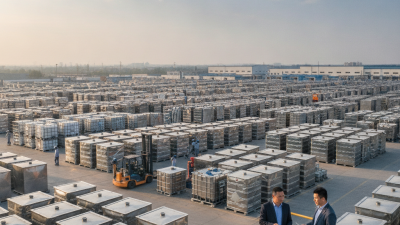
| 5. Modular Panel Square Tank | 5,000–100,000+ L | Panel-based; typical modules are about 1.00 m × 1.00 m, assembled to the required footprint | Hot-dip galvanized steel, stainless steel, or coated steel panels with a flexible liner | Commercial buildings, emergency supply, farms, factories, and community water systems | High capacity, expandable design, and transportable panels for difficult-access sites | Needs professional assembly, a designed foundation, and periodic liner inspection | Excellent before assembly; poor after installation | Approximately 10–30 years, depending on panel finish, liner material, and maintenance |
| 6. Galvanized Steel Square Tank | 2,000–50,000 L | Approximately 1.50–5.00 m wide × 1.50–5.00 m deep × 1.20–3.00 m high | Galvanized or coated carbon-steel panels, often with an internal liner | Agricultural irrigation, fire-water reserves, industrial process water, and bulk storage | Strong structure, scalable capacity, and good resistance to physical loads | Coating damage can lead to corrosion; liner and bolt connections require inspection | Moderate before assembly; site installation generally requires lifting equipment | Approximately 20–40 years with appropriate coating and maintenance |
| 7. Stainless-Steel Square Tank | 500–20,000 L | Approximately 0.80–3.50 m wide × 0.80–3.50 m deep × 0.80–2.50 m high | Stainless steel, commonly grades suitable for water-contact applications | Potable water, food processing, healthcare facilities, and high-hygiene installations | Excellent cleanability, strong corrosion resistance, and a long service life | Higher initial cost; chloride-rich environments require suitable material selection and care | Moderate; small units may be moved mechanically, while larger units are site-installed | Often 25–40+ years when correctly specified and maintained |
Choosing among the 7 best square water tanks for global buyers requires more than comparing prices. Material, capacity, and design determine service life. The 2023 WHO/UNICEF JMP report states that 2.2 billion people lacked safely managed drinking water in 2022. Storage reliability matters.
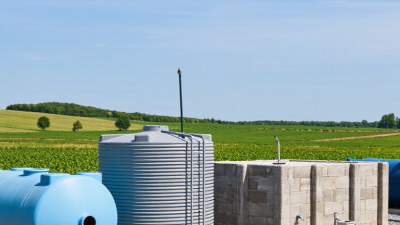
High-density polyethylene resists corrosion and suits many outdoor installations. Steel offers structural strength, but coatings and weld quality need inspection. Concrete handles large capacities, yet cracking and transport costs can complicate projects.
Capacity should reflect daily demand, rainfall, refill reliability, and emergency reserves. FAO’s AQUASTAT data indicates that agriculture uses about 70% of global freshwater withdrawals. A farm tank may therefore need a larger buffer than a household tank.
Square walls can improve space efficiency, especially beside buildings. However, corners may collect sediment if outlets are poorly positioned. That detail is easy to miss.
Tips: Check potable-water certification, UV protection, wall thickness, inlet size, overflow routing, and drain access. Ask for tested load data, not only marketing capacity. Measure the installation site carefully, including doorways and service clearance. A 5,000-liter tank may fit on paper but fail during delivery.
Insulation can reduce temperature swings, although it does not replace hygienic cleaning. Review local climate records and maintenance skills before selecting fittings. In my view, buyers sometimes overvalue appearance. Practical access usually matters more. Safety remains the unglamorous priority.
Selecting the best square water tank starts with water use, not appearance. The WHO/UNICEF Joint Monitoring Programme reported that 2.2 billion people lacked safely managed drinking water in 2022. This makes storage planning practical, especially where supply is intermittent. Define daily demand, refill frequency, and emergency reserve. A household tank needs different hygiene controls than an irrigation tank. Check usable volume, not advertised capacity. Internal fittings can reduce storage.
Measure the installation area carefully. Square tanks use corners efficiently, yet full tanks create heavy floor loads. Water weighs about one kilogram per litre, excluding the tank and frame. Ask an engineer to verify slabs, supports, wind exposure, and anchoring. Choose material suited to sunlight, temperature, and water chemistry. For potable use, request documented contact-safety testing accepted in the destination market. Inspect covers, screened vents, overflow routes, drain points, and cleaning access. A low price can hide maintenance costs. I would not treat “food grade” as enough evidence.
Tips: Compare five-year cost, not purchase price. Read the technical data sheet. Confirm warranty exclusions. Request batch traceability and test records. Leave clearance for inspection. Consider a level sensor where overflow could damage property. FAO AQUASTAT reports that agriculture accounts for roughly 70% of global freshwater withdrawals, so irrigation buyers should prioritize leak control and scheduling. Dark tanks may heat water faster in strong sunlight. Lighter surfaces may show algae sooner. The best choice is rarely perfect. It should match demand, site, water quality, and maintenance discipline.
Selecting one of the seven best square water tanks requires more than comparing capacity and price. I have seen installation problems begin with inaccurate site measurements. Check the tank’s length, width, height, inlet position, and service clearance before ordering. A level, compacted base is essential. Concrete usually performs well, but the design should match the filled weight and local ground conditions. Never place a full tank on loose soil.
Keep the tank away from sharp edges, standing wastewater, and excessive heat sources. Connect pipes with flexible sections where movement may occur. This reduces stress around fittings. During installation, inspect every valve, gasket, and overflow route. A small leak can waste thousands of liters. It happens. After filling, examine the seams and connections again, especially after the first temperature change. Local plumbing and water-quality requirements should guide material selection, particularly for drinking water storage.
Maintenance is simple, but it is not optional. Inspect the tank every few months for cracks, deformation, algae, blocked vents, and damaged covers. Clean internal surfaces with methods approved for the stored water. Avoid harsh chemicals unless qualified technicians confirm compatibility. For international purchasing, request drawings, material specifications, test reports, packaging details, spare-part lists, and warranty conditions in writing. Confirm metric dimensions, currency, delivery terms, port access, and import documentation before payment. A low quoted price may exclude inland transport, unloading equipment, or replacement fittings. I once underestimated clearance at a destination site; the tank arrived, but moving it inside became difficult. Planning should include the final route, not only the purchase order.